

Quick answer: Ear swelling after a facelift is normal and usually peaks within 48 to 72 hours. It often improves over 2 to 3 weeks with head elevation, cold compresses as directed, rest, and avoiding pressure on the ears. Call your surgeon if swelling worsens or appears with severe pain, redness, drainage, fever, or sudden hearing changes.
If you have been wondering how to reduce ear swelling after facelift surgery, I want to reassure you that swelling around the ears is a common and expected part of early recovery. A facelift can create beautiful, natural-looking changes, but the healing process takes time, especially around the areas where incisions are commonly placed.
In my practice, I find that patients feel much more comfortable when they know what to expect and understand how to support their recovery at home. With the right care, patience, and close guidance from your surgeon, you can manage post-surgical swelling more confidently and protect your results as your face continues to heal.
How Long Does Swelling and Bruising Last During Facelift Recovery?
Swelling and bruising are normal parts of facelift recovery. MedlinePlus notes that swelling, bruising, tenderness, and numbness can last 10 to 14 days or longer after a facelift procedure. Most patients notice the most swelling during the first few days, followed by gradual improvement over the next two to three weeks, while subtle swelling can last longer as the tissues continue to settle.
| Facelift Recovery Timeline | What You May Notice Around the Ears |
|---|---|
| First 48–72 hours | Swelling is often at its peak. The ears may feel tight, tender, puffy, or slightly blocked. |
| Days 4–7 | Swelling usually begins to improve, although bruising and mild ear pressure may still be present. |
| Weeks 2–3 | Most noticeable ear swelling and blocked-ear sensations usually decrease. |
| Several weeks later | Mild swelling, tightness, or numbness may continue to fade as the tissues settle. |
Key Takeaways
- Ear swelling after a facelift is normal and often peaks within the first 48 to 72 hours.
- Most noticeable ear swelling usually improves over the next two to three weeks.
- Mild ear pain, pressure, tenderness, or a blocked-ear feeling can happen during early healing.
- Keeping your head elevated, avoiding pressure on the ears, resting, and following postoperative instructions can support recovery.
- Call your plastic surgeon if swelling worsens or appears with severe pain, redness, warmth, drainage, fever, or sudden hearing changes.
Ear Swelling After Facelift: What’s Normal and What’s Not
Ear swelling occurs because facelift incisions are often placed around or behind the ears, temporarily affecting the surrounding tissue, blood vessels, and lymphatic drainage. The American Society of Plastic Surgeons explains that a traditional facelift incision often continues around the ear and ends in the lower scalp. This can cause the ears and earlobes to look puffy, feel tight, or appear slightly uneven during the first stage of recovery.
In most cases, ear swelling follows the same general pattern as facial swelling. The greatest puffiness often appears around 48 to 72 hours after surgery. After that, the swelling usually improves gradually over the next two to three weeks, with smaller amounts of swelling continuing to fade as the skin and deeper tissues adapt to their new position.
Some swelling near the ears is expected and temporary. However, I tell my patients to contact me promptly if they notice increasing pain, redness, warmth, bad-smelling drainage, or swelling that continues to worsen instead of improve. These changes may indicate infection or another complication and should be evaluated promptly.
How to Reduce Ear Swelling After a Facelift
When I guide facelit patients through recovery, my goal is to help minimize inflammation, support healthy circulation, and protect the delicate tissues around the incisions. The following strategies can help limit fluid buildup, reduce ear-related discomfort, and encourage smoother healing. Always follow your own surgeon’s operative care instructions, as every recovery is slightly different.
Use cold compresses
Applying cold compresses near the ears during the first forty-eight hours helps reduce inflammation and soothe tender tissues. Cold therapy gently constricts blood vessels, which can limit fluid accumulation around ear incisions. Use short intervals and avoid placing ice directly on the skin or directly over incision lines.
Keep your head elevated
Keeping your head elevated above heart level helps reduce fluid pressure around the ears and jawline. I often recommend sleeping on extra pillows or using a wedge pillow during the early recovery period to encourage drainage and reduce swelling.
Avoid pressure on the ears
Pressure from tight headbands, headphones, or sleeping on your side can worsen ear swelling and discomfort. Try to sleep on your back and avoid anything that presses against the ears while tissues are healing.
Avoid bending and strenuous activity
Bending forward or engaging in strenuous activity increases blood flow to the face and ears, which may worsen swelling. Gentle walking is encouraged, but heavy lifting and intense exercise should be avoided until your surgeon clears you.
Get plenty of rest
Rest gives your body the time and energy it needs to repair tissue and control inflammation. Quality sleep can support a smoother recovery and help swelling around the ears and incision sites gradually improve.
Stay hydrated
Staying well hydrated supports healthy circulation and helps your body naturally reduce swelling throughout the healing period. Drinking plenty of water keeps tissues nourished and helps the body manage excess fluid. I also recommend limiting dehydrating or high-sodium choices, which may contribute to swelling.
Eat a soft, low-sodium diet
Soft foods reduce facial muscle strain near the ears, while limiting sodium helps prevent fluid retention. Chewing tough or crunchy foods can increase pressure and lead to unnecessary discomfort or swelling. Softer options like yogurt, soups, and smoothies keep you nourished without overworking healing areas.
Don’t smoke or drink alcohol
I advise patients to avoid smoking and alcohol during recovery because both can interfere with healing and may increase swelling. Smoking restricts blood flow and slows tissue repair, while alcohol can dehydrate the body and contribute to inflammation.
The World Health Organization reports that smoking can delay healing and increase the risk of wound infection after surgery. Avoiding these habits gives your skin and tissues a healthier environment for recovery.
Protect your face from the sun
Protecting your face from the sun during recovery time is essential because UV exposure can worsen swelling and affect how healing tissues settle. Even a brief time outdoors can irritate or darken sensitive areas. Wear a wide-brimmed hat outdoors and use only surgeon-approved sunscreen once cleared.
Follow your plastic surgeon’s instructions
Your surgeon’s post-operative plan is designed to minimize complications and optimize healing. Following medication schedules, wound care guidance, and follow-up visits helps ensure ear swelling resolves safely and efficiently.

Secure Your Safe Treatment Experience with Dr. Kam
Join our satisfied clients who’ve experienced safe, effective treatments.
Is Ear Pain Normal After a Facelift?
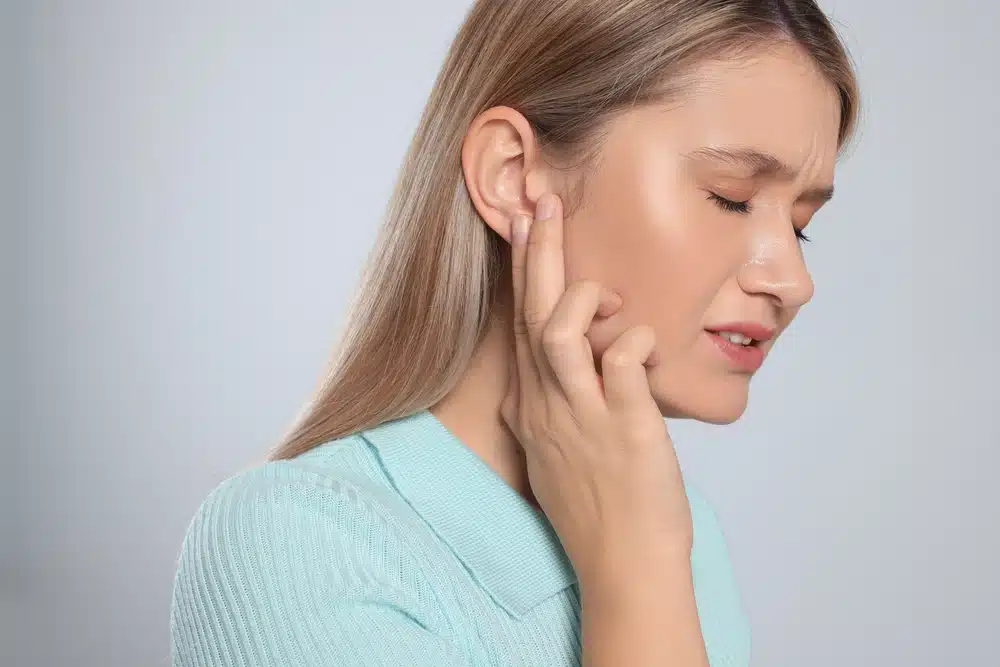
Mild ear pain, tenderness, tightness, or pressure can be normal after a facelift, especially because incisions are often placed near or behind the ears. Swelling around these areas can make the ears feel sensitive during the first stage of healing.
This discomfort should gradually improve as swelling decreases. Contact your plastic surgeon if ear pain becomes worse, feels severe, or appears with redness, warmth, drainage, fever, sudden hearing changes, or swelling that continues to increase.
Blocked Ears After Facelift: Why It Happens and When to Worry
Blocked ears after facelift surgery can feel like ear pressure, muffled hearing, fullness, or the sensation of water in the ear. In many cases, this happens because swelling around the ear temporarily affects nearby tissues. Dressings, dried blood, wax, or irritation around the ear canal may also contribute, so patients should avoid inserting anything into the ear unless their surgeon says it is safe.
In most cases, the sensation eases week by week as the swelling subsides. Resting with the head raised on pillows, following postoperative instructions, and applying cold compresses exactly as advised help the recovery proceed.
Call your plastic surgeon immediately if you experience:
- Ear pain that becomes worse or does not improve
- Fever or chills
- Fluid leaking from the ear or from any incision
- Sudden hearing changes
- Swelling that becomes worse instead of slowly shrinking
These signs are rare, but they may indicate infection or another complication that needs prompt medical attention. MedlinePlus notes that surgical wound infections may cause drainage, redness, pain, warmth, fever, or feeling unwell.
What Happens to Earlobes After a Facelift?
Earlobes may look or feel different after a facelift, but this is often temporary. Incisions are commonly placed along the natural curves of the ear and near the base of the earlobe, so the area may swell, firm up, or feel tight during early recovery.
During the first weeks of healing, the earlobe may look puffy, feel tight, or appear slightly different from what was expected. As swelling decreases and the tissues settle, the earlobe gradually regains its usual softness and natural position.
Some patients worry about a problem known as “pixie ear,” where the earlobe appears pulled downward or attached too tightly. With careful incision placement, modern facelift techniques, and thoughtful tissue handling, this concern can usually be minimized. My goal is always to preserve the natural shape of the earlobe while creating a balanced, refined result.
Trust Kam Facial Plastic Surgery for Your Facelift
Choosing an experienced facial plastic surgeon is one of the most important decisions you can make when considering a facelift. The face and neck contain delicate structures, and successful results depend on precision, training, and an artistic understanding of natural facial balance.
At Kam Facial Plastic Surgery, I take a personalized approach to every facelift. As a double board-certified facial plastic surgeon, I focus on creating elegant, natural-looking refinements that fit each patient’s anatomy, goals, and stage of life. If you are ready to explore your options, call us at 856-565-2903 or visit our contact page to schedule a consultation.

Frequently Asked Questions About Ear Swelling After Facelift
About the Author
Dr. Joanna Kam is a double board-certified facial plastic surgeon and the founder of Kam Facial Plastic Surgery. She specializes in facial plastic and reconstructive surgery, with a focus on natural-looking facelift results, refined facial rejuvenation, and patient-centered care.
Dr. Kam combines advanced surgical training with an artistic approach to help patients achieve balanced, elegant outcomes while feeling informed and supported throughout their recovery.