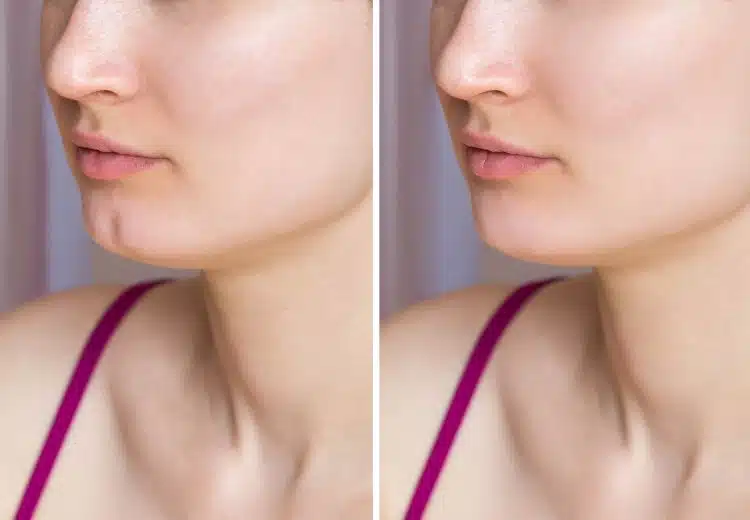
If you’re wondering how to get rid of a cleft chin, the good news is that there are several effective treatment options available. A cleft chin, also commonly called a butt chin or chin dimple, can be caused by muscle activity, soft-tissue indentation, or underlying bone structure. Depending on the cause, a cleft chin can often be significantly reduced or corrected using non-surgical treatments such as Botox or dermal fillers, while deeper or structural clefts may benefit from fat grafting or surgical correction.
Below, we break down every proven way to treat a cleft chin, explain who each option is best for, and help you understand how to choose the right solution based on your anatomy, aesthetic goals, and long-term expectations.

How to Get Rid of a Cleft Chin: Best Treatment by Cause
The best way to get rid of a cleft chin depends on what is causing the indentation. Different causes require different treatments, and choosing the right approach helps ensure natural-looking, balanced results.
- Deep or structural cleft chin→ Fat grafting, genioplasty, or chin implants may be needed to address the underlying anatomy.
- Muscle-related cleft chin → Botox injections relax the mentalis muscle, which can pull the skin inward and deepen the groove in the chin.
- Soft-tissue indentation → Dermal fillers add volume beneath the skin to fill in the central groove of the chin.
Is a Cleft Chin the Same as a Butt Chin or Chin Dimple?
Yes, they’re all talking about the same thing. A cleft chin is just the medical term for that small dip or line some people have in the middle of their chin. Outside of a doctor’s office, people tend to call it different things.
You might hear it referred to as a butt chin, a chin dimple, a split chin, or even a dimpled chin. It can sound confusing, but it’s really just different names for the same chin feature.
What matters more than the name is why it’s there and how noticeable it is, because that’s what determines the best way to soften or correct it. Once that’s understood, treatment options are usually very straightforward.
How Dermal Fillers Help Get Rid of a Cleft Chin
Dermal fillers are one of the most effective ways to treat a cleft chin, especially for patients looking for a non-surgical solution. Rather than changing the structure of the chin, fillers work by smoothing the indentation so the chin looks more even and balanced.
Dermal fillers help get rid of a cleft chin by:
- Filling in the central groove of the chin to reduce the visible dip
- Smoothing the skin surface, making the chin look softer and more uniform
- Improving the overall chin contour so it blends naturally with the lower face
During treatment, small amounts of filler are placed precisely where the indentation is most noticeable. This careful approach helps avoid an overfilled look and keeps the chin moving naturally.
Fillers are typically best for people whose cleft chin is caused by soft-tissue indentation rather than muscle movement or bone structure. Results are visible right away, and because fillers are temporary, adjustments can be made over time as facial features or aesthetic preferences change.
For many patients, dermal fillers offer a simple, low-commitment option for improving a cleft chin without surgery or downtime.
Types of Chin Fillers Are Suitable for Cleft Chins
Not all fillers are created equal, and choosing the right type of filler plays a key role in achieving balanced, natural-looking results. Different chin treatments are designed to address volume, contour, and structural support in distinct ways, depending on an individual’s facial structure. Understanding how each option works can help set realistic expectations and guide patients toward the solution that best complements their overall appearance.
Hyaluronic Acid Fillers
Hyaluronic acid fillers are often the first choice for softening a cleft chin because they offer smooth, natural-looking results and a high level of control.
- Longevity: Temporary results that typically last several months to a year
- What it is: A gel-based filler that closely mimics the body’s natural hyaluronic acid
- Best for: Mild to moderate cleft chins and patients looking for subtle improvement
- How it works: Gently fills in the central groove of the chin to smooth the indentation and improve contour
- Results: Visible immediately and adjustable if needed
- Recovery: Little to no downtime, with mild swelling or tenderness that usually resolves within a few days
Poly-L-lactic Acid Fillers
Poly-L-lactic acid fillers work gradually by encouraging the body to rebuild its own collagen, leading to a more natural improvement over time.
- Longevity: Results can last up to two years as collagen continues to rebuild
- What it is: A biostimulatory filler that stimulates collagen production rather than adding instant volume
- Best for: Patients who want subtle, longer-lasting improvement and overall skin support
- How it works: Triggers collagen growth that gradually improves chin texture and softens the cleft
- Results: Develop slowly over several months
- Recovery: Minimal downtime, though multiple sessions may be needed
Calcium Hydroxylapatite
Calcium hydroxylapatite fillers provide more structure and are often used when a cleft chin is deeper or when added definition is desired.
- Longevity: Longer-lasting than hyaluronic acid fillers, often up to a year or more
- What it is: A thicker filler made of calcium-based microspheres suspended in a gel
- Best for: Deeper cleft chins or patients who want stronger chin support
- How it works: Restores volume immediately while also stimulating collagen production over time
- Results: Noticeable right away, with continued improvement as collagen develops
- Recovery: Mild swelling or bruising may occur, but usually resolves quickly

Ready to Smooth Out Your Cleft Chin?
Book a consultation today and take the first step toward the look you want—no surgery, no downtime, just instant results!
Other Treatments to Fix a Cleft Chin
Dermal fillers are a popular option, but they’re not the only way to improve the appearance of a cleft chin. Depending on what’s causing the indentation and how long you want results to last, other treatments may be a better fit. Some focus on muscle movement, while others address volume or structure more permanently.
Botox Injections
Botox can be a great option when a cleft chin is caused or worsened by muscle activity, especially when the chin dimples more when talking or during facial movement.
- Longevity: Temporary results that typically last three to four months
- What it is: A neuromodulator that relaxes targeted facial muscles
- Best for: Cleft chins caused by overactivity of the mentalis muscle
- How it works: Relaxes the muscle that pulls the skin inward, helping smooth the surface of the chin
- Results: Subtle softening of the cleft rather than added volume
- Recovery: No downtime, with results developing over several days
Fat Grafting
Fat grafting is a more involved option that uses your own tissue to add volume and soften a cleft chin in a natural-looking way.
- Longevity: Long-lasting results, though some fat reabsorption is normal
- What it is: A procedure that transfers fat from another area of the body to the chin
- Best for: Patients who want longer-lasting volume and a more natural feel
- How it works: Harvested fat is carefully injected into the chin to fill the indentation and improve contour
- Results: Soft, natural-looking improvement once swelling resolves
- Recovery: Some downtime due to both the donor area and the chin
Genioplasty
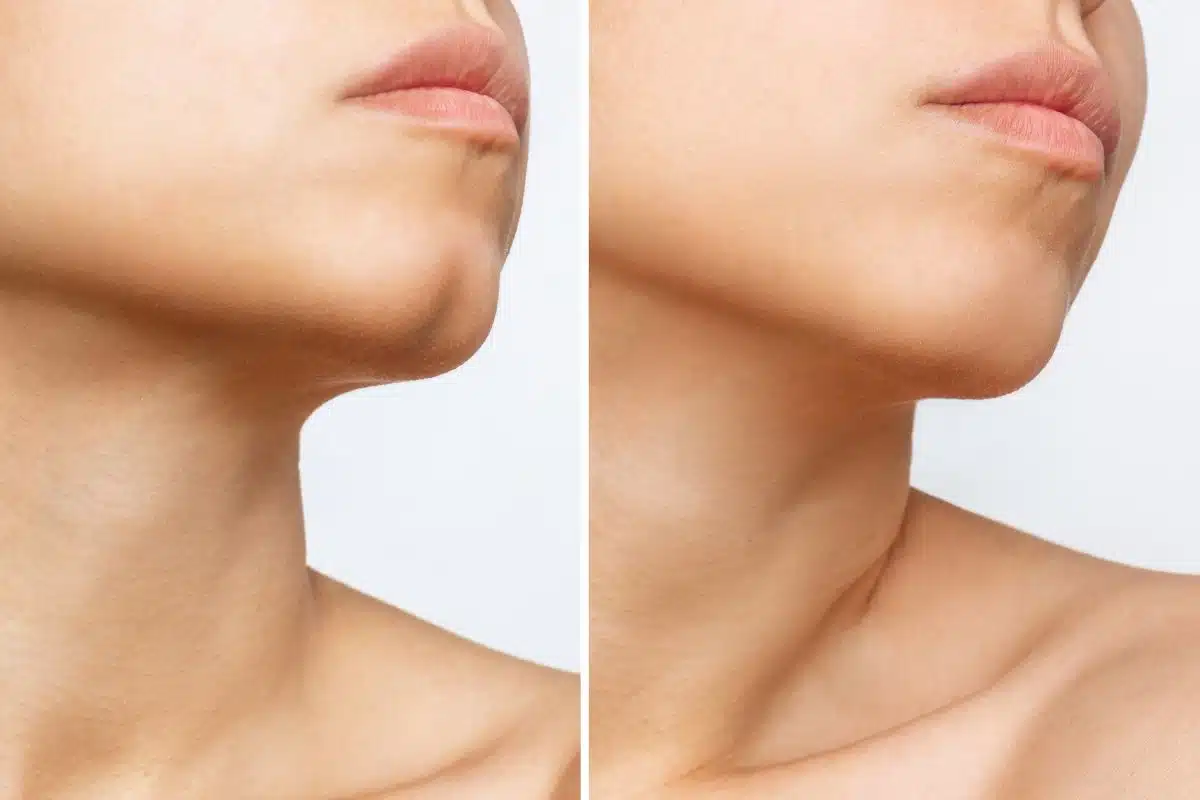
Genioplasty is a surgical option that corrects a cleft chin by reshaping the chin bone itself, rather than adding volume on top of it.
- Longevity: Permanent results
- What it is: A surgical procedure that repositions or reshapes the chin bone
- Best for: Patients with a deeper or more pronounced cleft chin caused by bone structure
- How it works: The chin bone is carefully modified or repositioned to smooth the indentation and improve overall chin shape
- Results: A more balanced, natural chin contour that addresses the cleft at its source
- Recovery: Longer recovery compared to non-surgical treatments, with swelling that gradually improves over several weeks
Chin Implants or Chin Augmentation Surgery
Chin implants offer another surgical approach, but instead of reshaping the bone, they add structure to the chin to improve contour and projection.
- Longevity: Permanent results
- What it is: A custom-shaped implant placed over the chin bone
- Best for: Patients who want stronger chin definition along with correction of a cleft chin
- How it works: The implant adds support and smooths surface irregularities, helping reduce the appearance of a cleft
- Results: Enhanced chin projection and a smoother lower-face profile
- Recovery: Surgical recovery with temporary swelling and discomfort that resolves over time
About Dr. Joanna Kam
Dr. Joanna Kam is a double board-certified facial plastic surgeon at Kam Facial Plastic Surgery in New Jersey, with expertise in non-surgical facial contouring and dermal fillers.
Credentials & Expertise
- Double Board-Certified: American Board of Otolaryngology–Head and Neck Surgery and the American Board of Facial Plastic & Reconstructive Surgery
- Non-Surgical Facial Rejuvenation: Experienced in using dermal fillers to enhance facial balance, restore volume, and refine features such as the chin and jawline
- Facial Contouring: Skilled in both surgical and non-surgical techniques to achieve natural-looking results
Education & Training
- BSc in Microbiology & Immunology, University of British Columbia
- MD, Virginia Tech Carilion School of Medicine (Alpha Omega Alpha Honor Society)
- Residency in Otolaryngology–Head and Neck Surgery, Henry Ford Health System
- Fellowship in Facial Plastic & Reconstructive Surgery, University of Pennsylvania
Clinical Approach
Dr. Kam takes an anatomy-focused, personalized approach to dermal filler treatments, aiming to improve facial balance and symmetry while maintaining natural results.

Schedule a Consultation for Your Cleft Chin Procedure
Choosing the right approach for treating a cleft chin requires more than selecting a product or technique. An experienced plastic surgeon with advanced training in facial plastic surgery understands how subtle changes in the chin can affect overall facial harmony. Professional guidance is essential to help you choose between fillers and surgery based on your anatomy, goals, and long-term expectations.
Dr. Joanna Kam brings a rare combination of technical precision and artistic insight to every treatment she performs. Double-board certified and highly experienced in facial procedures, she carefully evaluates each patient to recommend the most appropriate solution and ensure refined, balanced results. If you are considering dermal fillers for cleft chin correction or exploring other options, schedule an appointment by calling 856-565-2903 or visiting our contact page to request a consultation.