

A lip lift is one of the most effective cosmetic procedures for enhancing the upper lip and restoring a more youthful, balanced smile. The surgery itself is relatively quick, typically 45 minutes to an hour under local anesthesia, but what happens afterward matters just as much as what happens in the operating room. Understanding the lip lift recovery process helps patients feel confident heading into surgery and better prepared for each stage of healing.
What Your Lip Lift Recovery Really Looks Like
Recovery after lip lift surgery is straightforward, but knowing what to expect at each phase makes the healing process easier to navigate. These are the key points to keep in mind before your procedure.
- Most swelling and bruising from a lip lift resolve within the first two weeks.
- Sutures are typically removed within the first week, and most patients return to daily activities shortly after.
- The incision at the base of the nose gradually fades from a visible scar to a nearly imperceptible line over several months.
- Avoiding excessive lip movement, straws, and strenuous activity during early recovery supports proper healing.
- Final lip lift results, including a fuller upper lip and improved smile, continue to refine for two to three months.
The First Few Days After Lip Lift Surgery
The initial recovery period begins as soon as the procedure is complete. Because a surgical lip lift is typically performed under local anesthesia, there is no general anesthesia recovery to manage. Patients go home the same day.
During the first 24 hours, plan to rest. Some swelling and discomfort around the upper lip and under the nose are expected, and cold compresses applied gently to the area can help keep initial swelling manageable. Your surgeon will provide specific aftercare instructions, including how to clean the incision site and which medications to use for pain management.
By days two and three, swelling and bruising typically peak. The area around the incision may feel tight, and opening the mouth wide or making exaggerated facial expressions can create discomfort at the surgical site. Sticking to soft foods and avoiding straining the lips helps protect the healing incision during this early phase.
Lip Lift Recovery Timeline: The Healing Process Week by Week
Every patient heals at their own pace, but the lip lift recovery timeline generally follows a predictable pattern.
Days 1 Through 4: Early Healing and Wound Care
During the first few days, swelling and bruising are the most noticeable. Most patients manage pain and swelling with over-the-counter medication and find that each day brings gradual improvement. This is the period when careful wound care matters most — keeping the incision clean and moisturized according to your surgeon’s care instructions helps set the stage for optimal scar healing.
Days 1 – 4
Days 5 to 7: What to Expect After Stitches Removal
Sutures are typically removed around days five to seven. After suture removal, the incision site may still appear pink or slightly raised, but the area will begin to feel more comfortable. Many patients feel well enough to return to work and normal routines at this point, though the upper lip may still look slightly swollen.
Days 5 – 7
Weeks 2 and 3: Your Smile Starts to Take Shape
During this phase, the majority of visible swelling resolves and the lip shape begins to settle into a more natural position. Patients often notice their smile already looks more defined, with greater upper lip visibility and improved teeth show. Some residual tightness around the nose and lip is normal and gradually fades.
Weeks 2 – 3
Weeks 4 to 6: Returning to Normal Activity
The recovery process continues as deeper tissue healing takes place. The lip becomes softer and more natural in movement. Most activity restrictions, including heavy lifting and strenuous exercise, are lifted during this window based on your surgeon’s guidance.
Weeks 4 – 6
Months 2 to 3: Final Lip Lift Results
The upper lip reaches its settled shape, residual firmness resolves, and the incision matures into a fine, well-concealed line at the base of the nose. Subtle refinement can continue beyond this point, but most patients are enjoying their recovery and results well before the three-month mark.
Months 2 – 3: Final Lip Lift Results
patient results
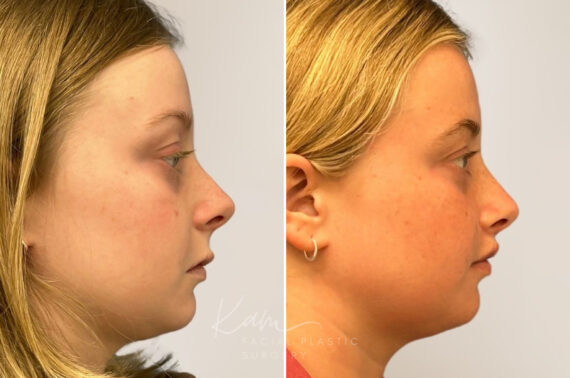
* All patients are unique and individual results may vary.
Swelling, Bruising, and Pain After a Lip Lift
Swelling is the most common concern during lip lift recovery, and it follows a predictable pattern. Initial swelling peaks around days two to three and steadily decreases over the following one to two weeks. Applying cold compresses during the first 48 hours and keeping the head elevated while sleeping can help reduce swelling and discomfort.
Bruising varies from patient to patient. Some experience mild bruising around the upper lip and along the base of the nose, while others see very little. Most bruising fades within seven to ten days and can be covered with makeup once the surgeon confirms the incision site has healed enough for cosmetics.
Pain after a lip lift is generally mild to moderate. Most patients describe it as tightness or pressure rather than sharp pain, and over-the-counter medication is usually sufficient. Prescription pain medication is rarely needed for this surgery.
How the Lip Lift Incision Heals: From Visible Scar to Smooth Lip Contour
One of the most common questions about lip lift surgery is whether the scar will be noticeable. The lip lift incision is typically placed at the base of the nose, right along the natural crease where the nose meets the upper lip. This strategic placement allows the scar to blend into a natural shadow.
In the first few weeks after surgery, the incision may appear pink, slightly raised, or firm. This is a normal part of the healing process as collagen rebuilds beneath the skin. Over the following months, the scar gradually softens, flattens, and lightens in color.
Good scar care makes a meaningful difference in how the incision matures. Following your surgeon’s wound care instructions, protecting the area from sun exposure, and keeping the incision moisturized all support a smooth healing experience. Most patients find that the scar becomes barely perceptible within several months, blending seamlessly into the contour of the nose and upper lip.
Tips for a Comfortable Healing Process and a Natural-Looking Smile
A smooth lip lift recovery depends largely on how well patients follow post-operative care instructions. These practical steps support proper healing:
- Avoid using straws, smoking, or vaping for at least two weeks after surgery, as the suction and movement can strain the healing incision.
- Sleep with your head elevated for the first week to help minimize swelling.
- Stick to soft foods during the initial days of recovery and avoid opening the mouth too wide while the incision is healing.
- Avoid excessive lip movement, including exaggerated smiling or stretching, during the first two weeks to protect the surgical site.
- Skip heavy lifting and strenuous exercise for one to two weeks, or until your surgeon confirms it is safe to resume.
- Keep follow-up appointments so your surgeon can monitor healing, assess the incision, and address any questions along the way.
Being patient with the lip lift recovery process is just as important as following care instructions. The final lip shape and smile emerge gradually, and the full results are worth the wait.

Discover how Dr. Joana Kam’s personalized techniques can help you achieve stunning results
Book your consultation in New Jersey now!
Why Your Facial Plastic Surgeon Shapes Recovery and Results
The skill and experience of your plastic surgeon directly influence how well a lip lift heals and how natural the final results look. A surgeon who specializes in facial plastic surgery understands the fine anatomy of the upper lip, nose, and surrounding tissue, and how subtle differences in incision placement, tissue handling, and closure technique affect everything from scar visibility to lip symmetry.
Dr. Joanna Kam is a board-certified otolaryngologist and fellowship-trained facial plastic surgeon at Kam Facial Plastic Surgery in Voorhees and Sewell, New Jersey. Her training in both reconstructive surgery and cosmetic procedures gives her a thorough understanding of facial anatomy, and her meticulous approach to lip lift surgery helps patients achieve balanced, natural-looking lip enhancement with well-concealed incisions.
Frequently Asked Questions About Lip Lift Recovery
Schedule Your Lip Lift Consultation with Dr. Joanna Kam in Sewell or Voorhees
If a long upper lip, reduced upper teeth show, or thinning lip shape has you considering a lip lift, a personalized consultation is the best way to understand what the procedure and recovery process will look like for you. Dr. Kam takes time to evaluate each patient’s facial anatomy, discuss goals, and create a tailored surgical plan. Contact the office to schedule a consultation at the Voorhees or Sewell location.